
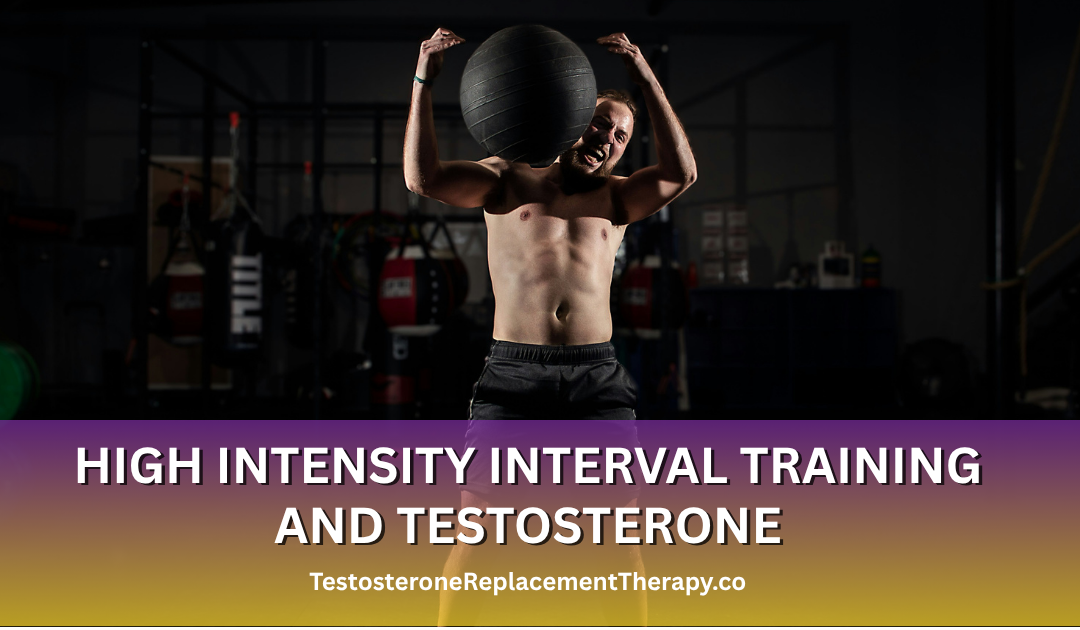
High intensity interval training (HIIT) has been shown in multiple studies to increase testosterone levels, both immediately after a single session and over weeks of consistent training. Research suggests HIIT produces a stronger hormonal response than steady, lower-intensity cardio, making it one of the more effective forms of exercise for supporting healthy testosterone.
If you’ve wondered whether your cardio routine matters for hormone health, here’s what the research actually shows about HIIT specifically.
What Counts as HIIT?
High intensity interval training alternates short bursts of intense effort with brief recovery periods. A typical protocol might include:
- 4-8 rounds of 30 seconds to 4 minutes at near-maximum effort
- Followed by equal or longer recovery periods at low intensity
- Total session length often ranging from 15-30 minutes
This differs significantly from steady-state cardio, which maintains a consistent, moderate effort level throughout.
What the Research Shows About HIIT and Testosterone
Acute (single-session) effects:
- A systematic review and meta-analysis found that a single HIIT session reliably increases testosterone immediately afterward, with elevated levels persisting for at least 30-60 minutes post-exercise
- Comparisons between HIIT and continuous aerobic exercise show HIIT producing a notably stronger testosterone-to-cortisol ratio response
Longer-term (training) effects:
- A study of men aged 35-40 found that structured HIIT periods increased morning testosterone levels alongside improvements in physical fitness
- An 8-week study on sedentary young men found that regular HIIT significantly increased total testosterone and improved body composition
- Research on masters athletes found that 6 weeks of HIIT produced increases in both muscle power and free testosterone
Comparison to other exercise types:
- A 2020 study found that moderate to high-intensity exercise led to significant testosterone increases, while low-intensity exercise did not produce the same effect
- This pattern holds across multiple studies: intensity appears to matter more than duration for hormonal response
Why HIIT Affects Testosterone More Than Steady Cardio
The proposed mechanisms include:
- Greater metabolic demand. High-intensity efforts require more energy mobilization, which appears to stimulate a stronger hormonal response
- Recruitment of larger muscle groups. HIIT, especially when combined with compound movements, engages more muscle tissue, which is associated with greater hormonal stimulation
- Favorable testosterone-to-cortisol ratio. While cortisol rises during intense exercise, well-structured HIIT appears to maintain a more favorable balance compared to prolonged steady-state cardio, which can elevate cortisol without the same testosterone benefit
Important Caveats From the Research
Not all findings are uniformly positive, and a few nuances matter:
- Hormonal responses to HIIT vary based on training duration, intensity, individual characteristics, and timing of measurement
- Some research in adolescents shows more complex, less consistent patterns than in adult populations
- Acute increases after a single session don’t automatically guarantee long-term baseline changes, though multiple studies do show sustained improvements with consistent training over weeks
A Sample HIIT Approach for Testosterone Support
Based on patterns across the research, an effective approach generally includes:
- 2-3 HIIT sessions per week, allowing adequate recovery between sessions
- Intervals of 30 seconds to 4 minutes at near-maximal effort
- Recovery periods of similar or slightly longer duration
- Total sessions of 15-30 minutes, since HIIT’s effectiveness comes from intensity, not duration
- Combination with resistance training, since strength training also has strong independent evidence for supporting testosterone
Who Should Be Cautious With HIIT
While generally beneficial, HIIT isn’t appropriate for everyone without medical clearance:
- Men with cardiovascular conditions should consult a doctor before starting intense interval training
- Beginners should build a baseline fitness level before jumping into maximal-intensity intervals
- Overtraining without adequate recovery can elevate cortisol chronically, potentially working against the very hormonal benefits HIIT is meant to provide
If You’re Already Training Hard But Still Have Symptoms
If you’re consistently doing HIIT and strength training but still experiencing fatigue, low libido, or stalled progress, it may be worth checking your testosterone levels rather than assuming more exercise is the answer. Reviewing the symptoms of low testosterone can help you decide if testing makes sense.
When Exercise Alone Isn’t Enough
For men with clinically confirmed low testosterone, exercise supports but cannot fully correct hormone deficiency. Testosterone replacement therapy combined with HIIT and strength training often produces the best outcomes for men with genuine deficiency. Treatment options include injections, gels, and pellet therapy, typically structured as monthly programs including labs and physician oversight, with pricing commonly starting in the low hundreds of dollars per month. Your provider can confirm specifics after reviewing your labs.
Take the Next Step
If your training is solid but your energy and results have stalled, book an appointment for bloodwork and a personalized plan.
FAQs
Does HIIT really increase testosterone more than regular cardio?
Research suggests yes. Studies comparing HIIT to steady-state cardio show HIIT produces a stronger acute testosterone response.
How many HIIT sessions per week are ideal for testosterone support?
Most research-backed protocols use 2-3 sessions per week, allowing adequate recovery between sessions.
Does HIIT raise cortisol along with testosterone?
Yes, both rise during intense exercise, but well-structured HIIT tends to maintain a more favorable testosterone-to-cortisol ratio than prolonged steady cardio.
How long after a HIIT session does testosterone stay elevated?
Research shows levels remain elevated for at least 30-60 minutes post-exercise in most studies, though duration varies.
Can beginners do HIIT for testosterone benefits?
Yes, but beginners should build baseline fitness first and consider medical clearance if they have any cardiovascular concerns.
Is HIIT better than weightlifting for testosterone?
Both have strong supporting evidence. Many effective programs combine both rather than choosing one over the other.
Sources
- PMC/NIH – The Effect of High-Intensity Interval Training Periods on Morning Serum Testosterone: https://pmc.ncbi.nlm.nih.gov/articles/PMC8156527/
- Wiley/Scandinavian Journal of Medicine & Science in Sports – Acute effect of HIIT on testosterone and cortisol levels: https://onlinelibrary.wiley.com/doi/10.1111/sms.13999