
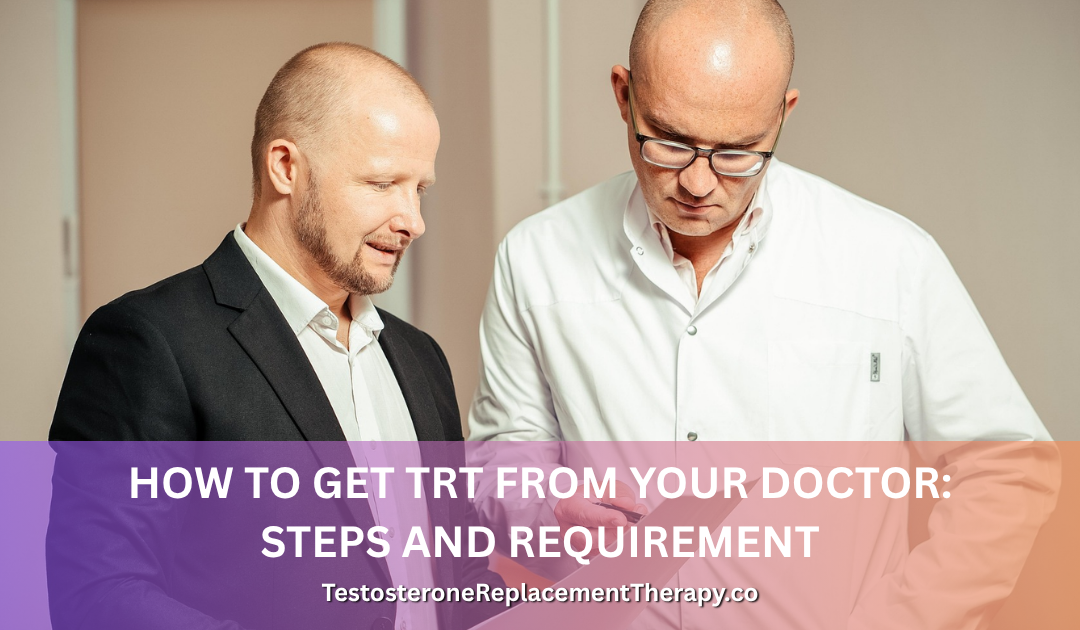
Walking into a doctor’s appointment prepared makes a real difference. It can mean the gap between an efficient evaluation and months of back-and-forth. Understanding how to get TRT from your doctor means knowing exactly what to say, which tests to request, and what the full process looks like from start to finish. Here’s the complete roadmap.
Step 1: Confirm Your Symptoms Align With Low Testosterone
Before your appointment, take an honest look at whether your symptoms match the recognized pattern.
- Persistent fatigue that adequate sleep doesn’t resolve
- Reduced libido or sex drive
- Difficulty building or maintaining muscle despite consistent effort
- Increased body fat, especially around the abdomen
- Brain fog, poor concentration, or memory issues
- Mood changes like irritability or low motivation
- Fewer morning erections than you used to have
Reviewing our symptoms of low testosterone page in detail before your appointment helps you describe your experience clearly and specifically once you’re in the room.
Step 2: Choose the Right Type of Doctor
Not every physician handles TRT evaluation equally well. Your main options include a primary care physician, often the first stop, though some are less experienced with hormone-specific evaluation. A urologist frequently manages hypogonadism as part of broader men’s health work. An endocrinologist specializes specifically in hormonal conditions. A dedicated men’s health clinic often has the most streamlined process of all four.
If your primary care doctor seems unfamiliar or hesitant, ask for a referral to urology or endocrinology directly. This usually produces a faster, more thorough evaluation.
Step 3: Request the Correct Blood Tests
This is one of the most important parts to get right. Don’t just ask for “a testosterone test.” Be specific.
Request total testosterone, free testosterone, and SHBG. Add LH and FSH to the panel. Include estradiol, a complete blood count for baseline hematocrit, and a PSA test for baseline prostate health.
Timing matters enormously here. Testing needs to happen in the morning, between 7 and 10 AM, when levels naturally peak. Testing later in the day can produce misleadingly low results even in men with genuinely normal production.
Most providers and insurers also require two separate morning draws, on different days, before confirming a diagnosis.
Step 4: Prepare to Discuss Your Symptom History Clearly
When you sit down with your doctor, come ready to describe specifics. How long have you noticed these symptoms? How much do they affect your daily life, work, and relationships? Have you noticed any particular patterns or triggers?
Concrete details help enormously here. Saying “I fall asleep at my desk most afternoons” carries far more weight than saying “I’m tired sometimes.”
Step 5: Understand the Diagnostic Threshold
For a formal hypogonadism diagnosis, most guidelines require total testosterone consistently below 300 ng/dL on two separate morning tests, combined with documented symptoms.
If your levels sit in a borderline range, say 300 to 400 ng/dL, with clear symptoms, some providers will still consider treatment. This requires more individualized clinical judgment though, so be prepared for a nuanced conversation.
Step 6: Discuss Delivery Method Preferences
Once your diagnosis is confirmed, your doctor will walk through delivery options. Injections remain the most commonly prescribed and cost-effective choice. Gels and creams offer a needle-free alternative. Patches provide steady daily delivery. Pellets require an in-office procedure every few months but need minimal ongoing effort otherwise.
Come prepared with your own preferences around needles, daily routine, and budget. These practical factors genuinely shape which method works best for your life.
Step 7: Ask About the Complete Monitoring Plan
Before you start treatment, understand exactly what ongoing monitoring looks like. Ask when your first follow-up blood test is scheduled, typically 6 to 8 weeks after starting. Ask what gets checked at each visit. Ask how your dose gets adjusted if needed, and what symptoms should prompt you to call between scheduled visits.
A provider who explains this clearly is demonstrating the kind of thorough, safety-focused approach you want in a TRT relationship.
What to Do If Your Doctor Is Reluctant
Some primary care physicians are less familiar with current TRT guidelines. They may hesitate even with confirmed low levels and clear symptoms in front of them.
If this happens, ask directly what’s causing the hesitation. Sometimes it reflects a genuine clinical concern worth understanding. Other times it simply reflects limited familiarity with current standards. Request a referral to urology, endocrinology, or a specialized men’s health clinic if needed. A second opinion from a more TRT-experienced provider is always a reasonable next step too.
Our FAQs page covers additional guidance on navigating this process, including how insurance coverage typically factors in.
Insurance and Cost Considerations
Before your appointment, it helps to understand whether your insurance covers TRT for confirmed hypogonadism, since most major insurers do. Find out whether prior authorization will be required, and what delivery methods your specific formulary covers. This preparation lets you have a fully informed conversation about treatment options that also fit your budget.
A Sample Timeline From First Appointment to Treatment
| Step | Typical Timeframe |
|---|---|
| Initial appointment and symptom discussion | Day 1 |
| First blood draw | Within 1 week |
| Second confirming blood draw | 1–2 weeks later |
| Results review and diagnosis discussion | 1–2 weeks after second draw |
| Prescription and insurance processing | 1–2 weeks |
| First dose administered | Roughly 4–8 weeks total |
Pricing for the Diagnostic Process
| Component | Estimated Cost |
|---|---|
| Initial consultation | $100–$300, often insurance-covered |
| Comprehensive hormone panel, both draws | $200–$500, often insurance-covered |
| Follow-up consultation for diagnosis | $50–$200 |
Walk Into Your Appointment Prepared
Being informed and specific about exactly what you need dramatically improves your chances of an efficient, thorough evaluation.
Book your consultation today and start your evaluation with a provider who specializes specifically in TRT diagnosis and management from the very first visit.
Frequently Asked Questions
How do I get TRT from my doctor if I suspect low testosterone?
Request a comprehensive morning hormone panel confirmed with two separate tests, then discuss your symptoms and treatment options based on the results.
What testosterone level is needed to get a TRT prescription?
Most guidelines require total testosterone consistently below 300 ng/dL on two separate morning tests, combined with documented symptoms.
What if my primary care doctor won’t prescribe TRT?
Request a referral to urology, endocrinology, or a specialized men’s health clinic, since not every physician has extensive experience with current TRT prescribing standards.
How long does it take to get a prescription after the first appointment?
Typically four to eight weeks from your initial appointment to your first dose, accounting for confirming blood draws and any insurance processing.
Do I need a specialist, or can my regular doctor prescribe TRT?
Either can prescribe it. Specialists just tend to have more streamlined and thorough evaluation processes overall.